This is a piece I’ve been sitting on for a while. I’ve wrestled with the right way to present it to you readers because to be honest, I care deeply about its subject matter. Frankly, I think everyone should care about it, as it helped to define the very fabric of the sport that has become our national pastime. Webster’s defines “lore” as “a particular body of knowledge or tradition.” It is so a part of the American story that we all take comfort in lore and legend in one form or another, because nothing beats a good story. I can’t think of a better way to describe it than the clip below does.
That clip from 1962’s The Man Who Shot Liberty Valance pretty much nails American storytelling. That’s not to say it’s all a lie or anything like that. But whether it’s in history or film or literature, we like to lean into some more fantastical elements. This form of storytelling is probably most prevalent in how we talk about our sports and while all the leagues document their history well, one rises above the rest. The cream of the crop is the behemoth that is the NFL and its archival production group NFL Films has done it better than the rest for six decades.
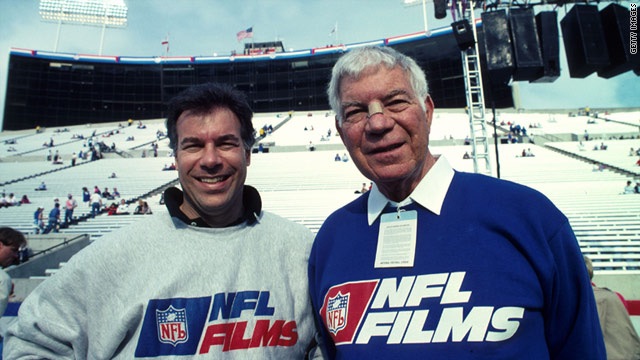
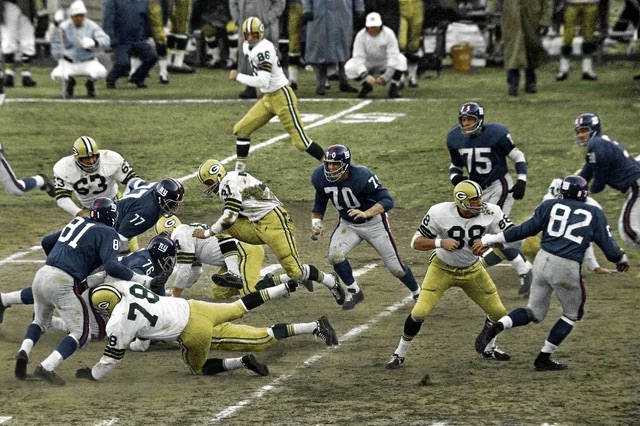
NFL Films was founded in 1962 (the same year as our film clip above) under the name of Blair Motion Pictures. The founder, Ed Sabol, created the production group after getting a camera to film his son Steve’s high school football games and named it after his daughter Blair. So this family affair got started by winning the bidding to document the 1962 NFL Championship game between the Packers and Giants. Sabol got the deal done for a measly $5,000, a figure hard to fathom considering the cost of NFL production rights today. The film of the game was so impressive, that commissioner Pete Rozelle asked the owners to agree to buy out Sabols company, and though they turned it down in 1964, a year later they agreed and renamed the company NFL Films.
Upon agreement of the deal, Sabol received $20,000 in seed money from each owner and in return he would make season highlight films for each team. By the time the 1970 merger came along, NFL Films grew with the league and the family business expanded. Ed Sabol was joined by his son Steve to run the business and from there it exploded. In the six decades since, whether you know it or not, you’ve watched an NFL Films production. There’s HBO’s Hard Knocks, NFL Network’s A Football Life and America’s Game, Inside the NFL, and other sporting events like the Stanley Cup and NBA Finals. The Sabol’s media empire has even produced documentaries of important news events in history as well, on the way to winning 112 Emmy awards. Let’s put it this way, some people want to break into the vault at Fort Knox, I want just five minutes in the NFL Films vault in Mount Laurel, NJ.
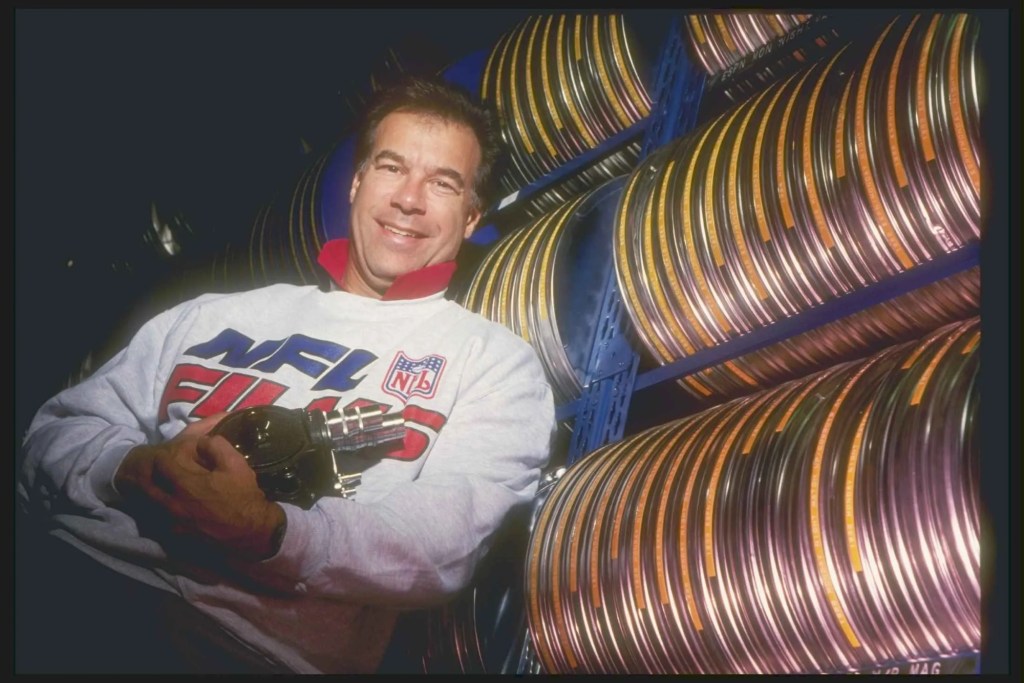
But it’s not about the Emmys and dollars and cents behind the operation. It’s about what NFL Films did to help build the brand that the NFL now thrives on today. After committing to fully preserving their footage in 1978, the headquarters in my home state has helped to preserve the history of the game. It’s larger-than-life characters, heartbreaking losses and legend-making wins. Clips, sayings, and even full scripts live on in the league to this day and without them I don’t think the NFL would be where it is. That’s why the Sabols are in the Pro Football Hall of Fame, because all they have done and their enterprise will do for the game of football.
You may be asking, what were some of their most notable creations that we still talk about today. Don’t worry folks, I’ve got you covered on that front.
- “America’s Team”: Everyone thinks the Cowboys came up with their nickname. Try again. It was the team at NFL Films who had narrator John Fecenda call Dallas America’s team in their 1979 season highlight film. Head Coach Tom Landry actually hated the name when it was given, but it’s stuck around ever since.
- “The Frozen Tundra”: No it wasn’t just used in game broadcasts in Lambeau or Cleveland Municipal or Soldier Field. John Facenda strikes again, having popularized the phrase on NFL Films. It’s lasted ever since and you’ve no doubt said it yourself on a football Sunday.
- “Not For Long”: Everyone loves to laugh about this one, but they don’t really know its origin story. The humorous NFL acronym actually stems from an NFL Films mic’d up segment where Falcons head coach Jerry Glanville uttered the famous line. “This isn’t college. You’re not at a homecoming. … This is the NFL, which stands for ‘Not For Long’ when you make them horse-bleep calls.”
- “There’s a Gleam”: The poetry that often comes out of this violent game is beautiful beyond comprehension. Laugh at poor Marty Schottenheimer all you want; this speech gives me the chills.
- “In the Alley”: For us football nerds out there, THIS clip is the book of Genesis. It’s everything about the finer points of the game distilled down into one perfect moment on camera. Coach Lombardi’s genius lives on because of NFL Films.
Obviously if you’ve read this far you understand that NFL Films was far more impactful than most entities in sports history. But it’s not just because they captured great moments, wrote great scripts or put a microphone on a charismatic figure. The secret sauce to the beautiful concoction was two beautifully deployed ingredients. They are spine tingling music and voices that echo through the ages.
The Voices
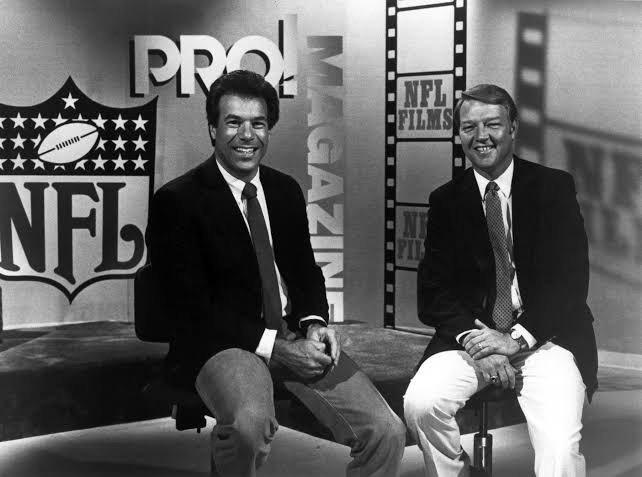
The Sabols and the league knew to properly capture the grandeur of the game, they needed great voices to bring their films to life. So from the get-go and continuing through the modern age the best voice talent around has manned the recording booths at Mount Laurel. Famous actors such as Burt Lancaster, Burl Ives, Carl Weathers, J.K Simmons, Laurence Fishburne, Tom Selleck and Liev Schreiber have all been fixtures in the celebrity ranks. Regional league broadcasters like Jefferson Kaye, Andy Musser and more have done work for them as well. While the great Scott Graham is the current voice of the productions, two men rise above the rest.
The first being Harry Kalas, who was in the rotation in between Phillies broadcasts on the radio, before taking over as the main production voice in 1985. Kalas would man the post with his velvet pipes until 2009, and there was no voice out there that could match his delivery. He was effortlessly smooth on the various films the Sabol’s would put in front of him and he provided such color to the proceedings. He has the unique honor of being integral to the history of baseball and football for his on-air work.
As great as Kalas was though, his predecessor will always be the gold standard. That of course is John Facenda, “the voice of god” as he is called around the league. Facenda was a Philadelphia sportscaster who happened to be at the right place at the right time for a chance encounter with Ed Sabol. He stepped into the role in 1965 and his baritone voice defined football for generations to come. He could define stakes for any game and make you feel like the action was a matter of life and death. The great Bob Costas later called his voice, “one of the most remarkable instruments in the history of broadcasting.”
“I started to rhapsodize about how beautiful it was. Ed Sabol, the man who founded NFL Films, happened to be at the bar. He came up to me and asked, ‘If I give you a script, could you repeat what you just did?’ I said I would try.” – John Facenda
The Music
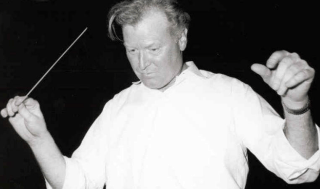
As NFL Films got off the ground in the mid 60’s they continued to try and find ways to enhance production. Enter Sam Spence, who was teaching music in Munich Germany when he was asked in 1966 to score mini documentaries that were presented on network TV. Spence came in and began composing some of the most iconic music in the history of sports media, and they helped bring these productions even more to life. There are so many great selections from the catalog, so many we’d be stuck here for weeks, but here’s a few of my favorites for your listening pleasure. And don’t worry, if you’re concerned, we’re leaving out an obvious one, it’ll be in our final segment.
- A Classic Battle just screams Super Bowl drama
- Autumn Thunder feels like it has the energy of a crisp practice session
- A Golden Boy Again always seems to pair well with player’s celebrating a big win
- Forearm Shiver…SpongeBob fans you know what’s up
- Ramblin’ Man from Gramblin’ just has that classic Sam Spence feel to it
The Perfect NFL Films Piece
To wrap things up, I wanted to share my favorite NFL Films piece with you. There is really only one pick for this final section of our post, it’s name is synonymous with the NFL and one team in particular. The Autumn Wind, debuted in 1974 in the NFL Films recap of the Oakland season, and it was so moving that Raiders owner Al Davis was speechless, before gathering his thoughts and saying “it epitomized everything that the Raiders stood for.” This specific clip above is a super cut assembled over the years but the Autumn Wind is the perfect combination of the Sabol’s vision and writing, Facenda’s voice talent, and Spence’s score. It is FOOTBALL at it’s finest.
I hope you enjoyed reading this one as much as I enjoyed putting together, and that maybe you learned a thing or two about NFL Films and how lore helped the league became the titan it is today! Check out our Instagram feed for special gameday and promotional content. Our podcasts are available on Spotify. Check out our friends on the The Rangers Ed Podcast! We’ll be back with more soon.


Leave a Reply